Dog boots for Canadian weather: fit, acclimation and when to take them off
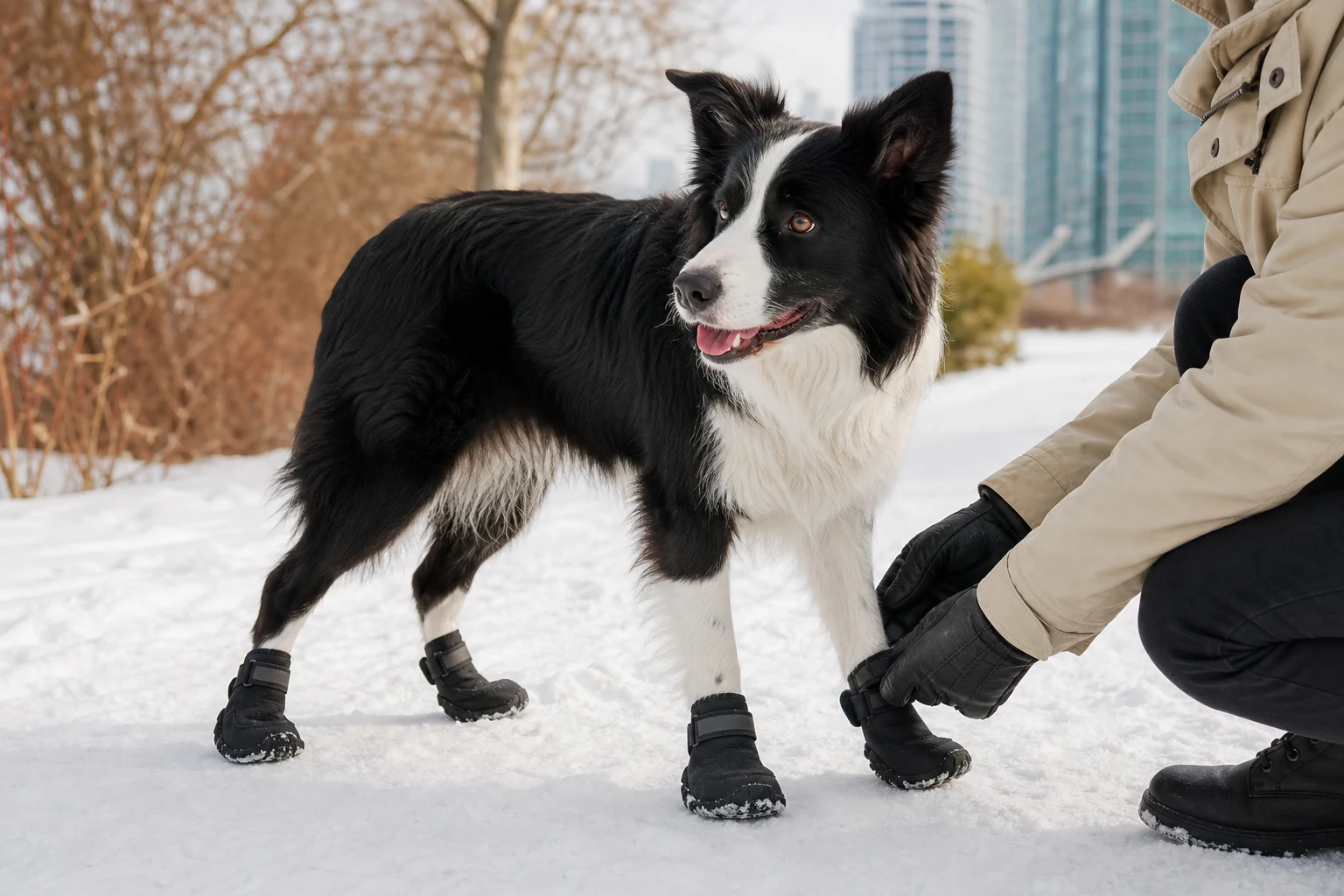
Dog boots can be useful in Canada, but they are not a universal answer to cold, ice, salt, heat or sharp ground. A boot that stays secure on one dog may twist on another; a warm lining can become wet, and a strap that seems snug can affect comfort or circulation. The safe approach is to match footwear to the actual condition, measure the actual paws, practise indoors and check often.
Start with the American Kennel Club guide to choosing dog boots and the Canadian Kennel Club grooming guidance, then consider your dog’s age, coat, paw health, gait and tolerance. No brand, shape or material works for every dog, and no article can set a safe temperature for every individual.
Match protection to the ground
Cold conditions can bring ice balls, dry or cracked pads, frostbite risk and irritation from de-icing salt. The AAHA cold-weather guidance recommends checking and wiping paws after winter outings. VCA’s cold-weather paw strategies also describe snow build-up, cracked pads and chemical irritation. Boots may reduce contact, but a shorter route, a cleared surface, a rinse and a warm rest can be better than keeping footwear on a struggling dog.
Road salt and ice melt are not the same on every pavement. Some residues irritate skin, and a dog may lick material from its feet after coming indoors. The VCA ice-melt guidance explains why wiping and checking paws matters. In summer, hot pavement and rough ground create a different risk; VCA’s paw-injury guidance discusses burns and injuries. A boot may help in some situations, but shade, timing, grass, rest and route choice are alternatives—not promises.
Measure all four paws
Measure while the dog is standing and bearing weight on a firm, non-slip surface. Trace each paw or record its length and widest point, including the nails if the maker’s instructions require it. Measure front and hind paws separately: they may not match. Repeat after a trim or coat change, and write the measurements down rather than relying on a remembered size.
A correct length is only one part of fit. Check the boot’s internal width, opening, sole shape and room for natural toe spread. The paw should sit fully inside without folding toes under. The boot should flex where the paw flexes and offer traction without forcing an altered gait. If the dog shortens its stride, lifts a foot repeatedly, scuffs, crosses legs or refuses to walk, treat that as feedback—not stubbornness.
Try one boot indoors first. Watch the paw stay centred while the dog takes a few steps, turns and lies down. Then try a pair on opposite feet before attempting all four. Recheck after a few minutes for twisting, dampness, hair caught in a closure, pressure marks or a cold-looking toe. A boot that fits on a stationary paw can fail during movement.
Straps, closures and circulation
Closures should hold the boot without pinching. Fasten them high enough to stay secure but never so tightly that they leave a deep groove, rub the dewclaw or restrict normal movement. Check the skin above and below the strap, and compare both sides. Swelling, unusual coldness, pale or darkened tissue, persistent licking or a sudden change in gait means remove the boot and reassess.
Do not stack socks, wraps and boots unless a veterinarian has directed the combination. Extra layers change the fit, trap moisture and can hide an injury. Keep fur around the paw tidy only according to the breed’s grooming plan; do not cut into pads or use a blade to solve a boot-fit problem. If a dog has a known paw, circulation, neurological or orthopaedic condition, ask the veterinary team before using footwear.
Choose a sole for the task
Look for a sole that flexes enough for a natural step and offers useful grip on the surface you actually use. A very rigid sole can alter gait; a smooth sole may slide on wet flooring; a bulky tread can collect snow, gravel or salt. No sole can guarantee traction on every ice, rock, deck or pavement. Test indoors, then on a clean familiar surface, and watch how the dog moves rather than judging the boot by appearance.
Footwear is not a substitute for route planning. The AAHA winter-walk advice recommends attention to salt, ice and debris between toes. A boot can slip or fill with snow; a short walk on a maintained path may be safer than a longer walk with constant adjustment. In warm weather, avoid assuming that a boot blocks heat. Check the paws and the surface, schedule activity thoughtfully and stop before fatigue or discomfort.
Acclimate in small steps
Dogs notice footwear as a new sensation. Let the dog see and sniff one boot, then pair calm attention with praise or a reward. Touch the boot to a shoulder, move it near a paw and stop. Next, place one boot on for a few seconds while the dog stands, remove it and reward. Build to a few steps indoors, then one boot on each side, then all four for a short, supervised period.
The AKC acclimation guidance supports gradual familiarisation and positive reinforcement. Do not laugh at a high-stepping dog, drag it forward or punish freezing. If the dog chews, pants, hides, repeatedly shakes a foot or cannot settle, remove the boots and return to an easier stage. A force-free trainer can help if the dog has a history of painful handling.
Check often, remove promptly
Boots should be supervised. Inspect after the first few minutes, after a change of surface and whenever the dog’s gait changes. Remove them if they twist, slip, collect snow, become wet inside, rub a dewclaw, trap a burr or create a pressure mark. At home, take them off unless your veterinarian has given a specific reason to keep a protective covering in place.
When boots come off, inspect the top and underside of every paw. Look between toes, around nails and under any hair that has become damp. Rinse salt or grit with lukewarm water when needed, pat dry and allow the paws and boots to dry separately. Do not use direct heat on chilled or potentially injured tissue. The VCA frostbite reference explains why suspected cold injury needs careful veterinary handling.
Maintain the boots without creating hazards
Follow the care instructions for the footwear, remove hair and debris, and dry it completely before the next use. Check seams, soles, closures and inner surfaces for cracks, rough edges or retained grit. Keep pairs together and discard a boot that has lost its shape or can no longer be secured. Avoid improvising adhesives, harsh solvents or heat that could damage the material or leave residue on the paws.
Keep a simple note of which conditions the dog tolerated, how long the boots stayed secure and where rub marks appeared. This is more useful than assuming the same footwear will work on every route. AAHA’s foot-health guidance reinforces the value of regular inspection for active dogs, including attention to pads and nails.
Know the veterinary red flags
Remove footwear and seek veterinary advice for persistent licking, bleeding, swelling, blisters, cracks, pale or blue-looking tissue, darkened tissue, marked coldness, limping, refusal to walk, severe pain or suspected frostbite or burn. The Merck Veterinary Manual dermatology overview is a reminder that skin findings need clinical assessment. Do not cover an untreated wound with a boot and carry on.
Age, health, coat, wind, wetness, activity and acclimation all change risk. The AKC winter-safety advice notes that dogs do not all tolerate cold in the same way. There is no responsible universal temperature threshold here: watch the dog, shorten the outing and contact a veterinarian when signs are concerning.
Alternatives when boots are not the answer
Depending on conditions, alternatives include a cleared or grass route, shorter outings, a towel-and-rinse entry station, a dry resting place, paw checks, shade, timing activity away from hot surfaces and avoiding salted pavement. A paw balm or coat may be appropriate for some dogs only after checking ingredients, fit and veterinary advice; never present a product as universally safe or necessary. The home-care routine explains how to organise towels, washable resting layers and calm returns indoors.
FAQ
Does every dog need boots in Canadian weather?
No. Boots can help in some conditions, but fit, tolerance, paw health, terrain and the length of the outing matter. Some dogs do better with shorter routes, cleaned paws and a dry-up routine. Treat footwear as one option, not a universal requirement.
How do I measure my dog’s paws?
Measure all four paws while the dog is standing on a firm surface, with weight distributed normally. Record length and width, then compare those measurements with the maker’s instructions. Front and hind paws can differ, and a size that fits one foot may not fit another.
How tight should a boot strap be?
It should hold the boot without pinching, rubbing or changing circulation. Check that you can see normal toe movement and feel no coldness, swelling or discoloration. Recheck after a few minutes of walking; a strap that slips or leaves a deep mark needs adjustment or a different design.
How can I acclimate a dog to boots?
Start indoors with one boot for a few seconds, reward calm behaviour and remove it before the dog panics. Add more boots and time gradually, then practise a few steps on a safe surface. Stop if the dog is distressed, persistently chewing, limping or refusing to move.
When should boots come off during a walk?
Remove them for frequent checks, whenever they become wet inside, slip, collect snow or debris, rub the skin, or make the dog change gait. Take them off at home unless a veterinarian has given a specific reason to keep a protective covering in place.
When do paw problems need a veterinarian?
Seek veterinary advice for persistent licking, bleeding, swelling, cracks, blisters, pale or darkened tissue, cold numb paws, limping, marked pain or suspected frostbite or burn. Do not rely on a boot to cover an untreated wound or to decide whether tissue is safe.
Sources for a careful decision
For more context, compare the AKC boots guide, the AAHA cold-weather resource, the VCA paw-protection guidance and the veterinary sources linked above. Pair this page with the editorial blog. The best choice is the one that fits the individual dog, the surface and the moment, with frequent checks and an easy decision to stop.