Living with a show-coated dog: coat care, furniture and a practical clean-home routine
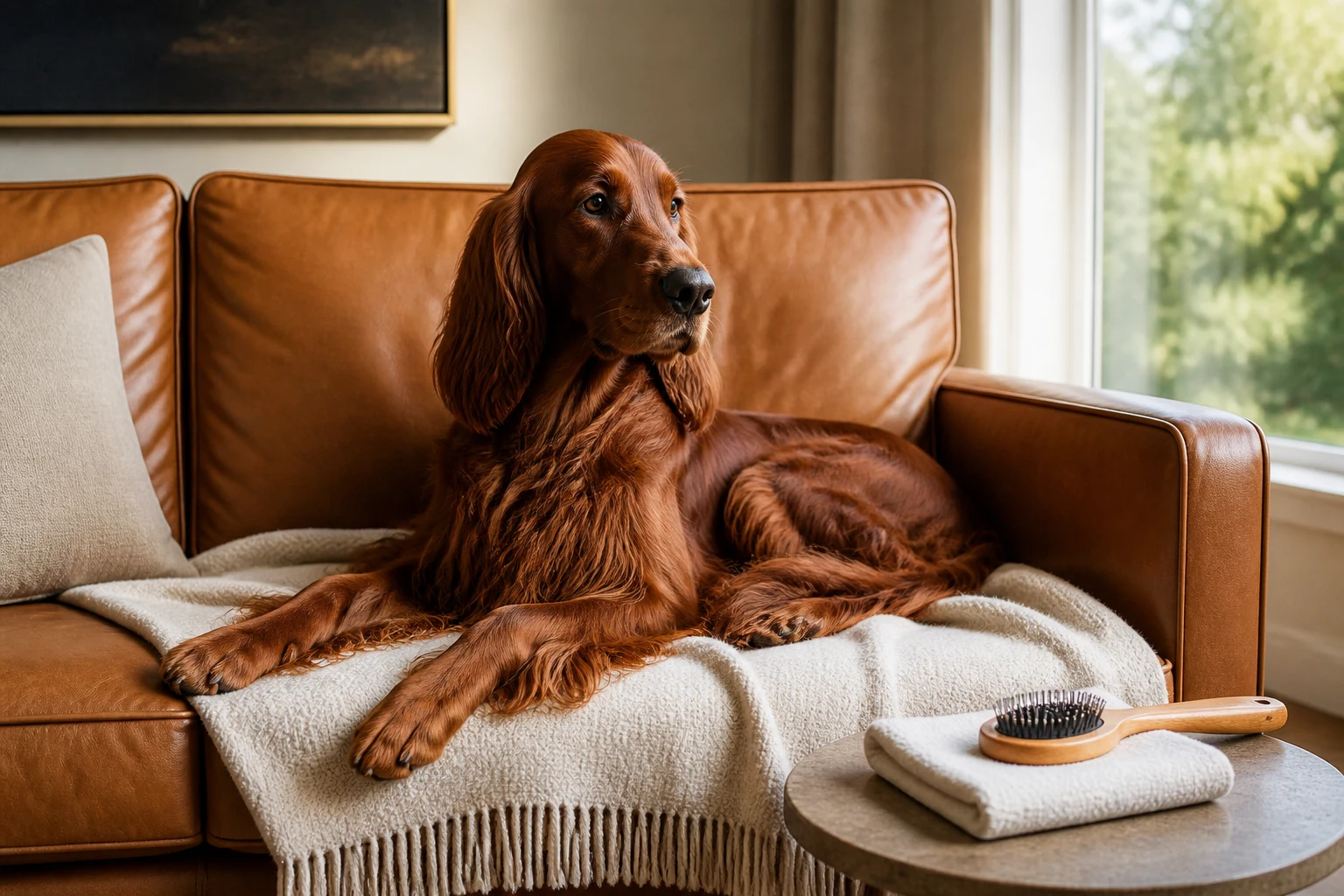
A show coat collects rain, grit, leaves, food and loose undercoat, then returns to the sofa with the dog. A workable Canadian routine inspects early, brushes by coat type, manages wet-weather returns, protects resting places and cleans surfaces safely.
“Show-coated” covers many breeds and textures. A short, close coat, a double coat with seasonal shedding, a long feathered coat and a hand-stripped coat do not need the same tools or schedule. The Canadian Kennel Club’s grooming guidance is a useful starting point, but your dog’s breed standard, coat condition, activity and tolerance should shape the details. A show-ring finish is a presentation choice; comfort, skin health and a willing dog come first.
Start with a coat map, not a calendar
Once a week, stand the dog on a non-slip surface and look systematically from nose to tail. Check behind the ears, under the collar, armpits, groin, feathering, tail furnishings and between the toes. Use your fingers to feel for heat, dampness, knots, burrs or a tender area. Then use the appropriate brush or comb in small sections, working with the hair rather than pulling through a mat.
Short coats often need a quick weekly inspection and a wipe-down after outdoor work. Dense double coats may need more frequent line brushing when the undercoat is shedding. Long or silky coats can hide small tangles where limbs meet the body and may need several brief sessions each week. Curly, corded, stripped or specially shaped coats have their own professional methods. The AKC overview of grooming tools explains why coat length and density should determine tool choice. Use that as a vocabulary guide, not as a shopping list or a reason to use a harsh de-shedding method indiscriminately.
Keep sessions short enough that the dog can succeed. Brush one side, pause, offer a quiet reward, then return later. Stop when the dog is worried, sore or over-tired. Pulling harder can turn a manageable tangle into a handling problem. A professional groomer can show you how to separate a mat safely; painful, tight or extensive mats are a reason to ask for help rather than improvise.
Build a small, safe grooming station
Store the brush, comb, towels, nail equipment, a washable mat and a rubbish bag together, away from children and curious mouths. Choose tools that you can control and that suit the dog’s coat; avoid sharp improvisations, fragranced sprays and anything that makes the dog flinch. Inspect handles, teeth, blades and cords before use. The AKC guidance on feet, eyes and ears reinforces a useful principle: introduce handling and tools gradually, with rewards and a light touch.
Nails and paw furnishings deserve their own check. Long nails can alter footing, while packed snow, ice melt, salt, grit or a small burr can irritate a pad. The AKC nail-care routine describes a stepwise way to teach paw handling. If a dog resists suddenly, assume discomfort is possible. Do not force a trim simply because a show or photograph is approaching.
Make rain, snow and mud boring
Set up a landing zone just inside the entrance: a washable mat, two or three absorbent towels and a place for the lead. On return, pause before the dog runs through the house. Wipe or rinse paws, check between toes, remove visible grit and blot the feathering. If the dog is soaked, let it shake in the entry area, then dry in sections. Damp undercoat under a collar, harness or armpit can tangle and irritate skin, so do not cover it and forget it.
For snow and road salt, read the AAHA cold-weather safety guidance and its practical advice on wiping paws after a walk. Use lukewarm water when rinsing; very hot water can be uncomfortable and a rushed cold rinse can make handling harder. A properly fitted boot or coat may help some dogs, but introduce it at home and remove it if it rubs, traps moisture or causes stress.
Do not chase a perfectly white fringe after every walk. Remove what can be removed comfortably, allow the dog to settle and schedule a proper bath when needed. Frequent full bathing can dry some skin, while leaving mud packed into hair creates its own problems. Your veterinarian or groomer can help set a sensible interval for the individual coat.
Protect furniture with washable layers
Give the dog a clear resting area and place a washable throw or fitted cover over the sofa section it actually uses. Keep a second cover ready while the first is in the wash. A thin mat beside the door catches grit before it reaches upholstery, and a washable bed cover makes loose hair easier to gather. Choose fabrics that do not snag the coat or become hot, slippery or noisy.
Furniture protection works best as management, not exile. Invite the dog onto a prepared surface when the coat is dry and paws have been checked. If the dog moves to another cushion, calmly guide it back or add a washable layer there. Never punish shedding, drool, a muddy footprint or a startled jump. A quiet station, a chew or a few treats can make the clean-up zone feel predictable.
For leather, upholstery or finished wood, follow the furniture maker’s care instructions. Vacuum loose hair with a suitable attachment, lift debris rather than grinding it into the weave, and test any cleaner on a hidden patch first. A product that does not visibly stain may still alter colour, sheen or finish. Do not mix cleaners, spray around the dog or use a hair dryer to reshape furniture. Let cleaned surfaces dry and air out before the dog returns.
Clean safely around the animal
“Natural” and “pet-friendly” are not complete safety assessments. Read the label, dilute only as directed, ventilate and keep bottles, cloths and buckets secured. The ASPCA household-products guidance notes that many cleaners are safe when used as labelled, while exposures still require prompt veterinary or poison-control advice. The Pet Poison Helpline’s cleaning-products resource explains why fumes, wet residues and contact with paws or fur matter.
Use a three-part test before cleaning a visible mark: identify the surface, test a small hidden area and confirm the dog can stay away until the area is dry. Never use a furniture product on the coat or paws. If cleaner splashes on the dog, do not guess at home remedies; contact your veterinarian or a poison-control service with the product name and label.
Inspect skin and coat, not just the room
Extra hair on the sofa is usually a housekeeping fact, not a diagnosis. Sudden shedding, bald patches, persistent licking, odour, redness, crusts, repeated scratching or a coat that becomes greasy or brittle deserves attention. The AAHA shedding guide explains that seasonal change can be normal, while abrupt changes may warrant veterinary review. The Merck Veterinary Manual’s dermatology overview shows why skin problems cannot be sorted out by a furniture-cleaning routine.
Check paws after every wet or salted outing during winter. Cracks, swelling, bleeding, a strong reluctance to walk or repeated licking are not grooming failures. Keep the dog warm and comfortable while you arrange advice. A show date never changes the threshold for pain or illness.
A calm weekly reset
Pick one low-pressure day for the full reset: wash the resting covers, shake or vacuum the mat, inspect the dog, brush in sections, check nails and paws, and record anything unusual. On other days, use the two-minute version at the door: paws, feathering, ears, visible debris and a dry resting place. The AKC’s grooming-challenge guide is a reminder that consistency reduces mats and makes small issues easier to spot.
Teach the sequence when nothing is urgent. Touch a paw, reward, release. Lift an ear, reward, release. Show the brush, reward, put it away. Gradually add a stroke, a comb, a towel and a short pause on the mat. If the dog freezes, pulls away or growls, reduce the step and seek force-free professional guidance. Cooperation is a practical part of coat care, not a cosmetic extra.
FAQ
How often should a show-coated dog be brushed?
There is no universal interval. Match brushing to coat type, density, activity and matting risk: short coats may need a weekly check, while longer or feathered coats often need several gentle sessions. Your dog’s coat and comfort, not a calendar promise, should set the rhythm.
What should I do when my dog comes home wet or muddy?
Use a calm entry routine: towel at the door, inspect paws and feathering, rinse only what needs rinsing, then dry thoroughly with a comfortable method. Check skin folds, between toes and behind ears, and postpone furniture access until the coat is clean and dry.
Can I use any household cleaner around my dog?
No. Follow the label, ventilate, keep the dog away until the surface is dry, and never mix products. Test a small hidden area of the furniture first because a cleaner that is safe for one material may mark another. Ask a veterinarian or poison-control service about exposure.
How do I protect a sofa without making the dog anxious?
Use washable throws or fitted covers on the dog’s preferred resting areas, keep a washable mat near the entrance, and teach a relaxed station with rewards. Protection should be predictable and comfortable; it should not become a punishment for shedding or muddy feet.
Should I trim paw hair or nails before a show?
Use the breed’s grooming plan and the advice of a qualified groomer or veterinarian. Introduce handling gradually, use appropriate tools, and stop if the dog is distressed. Nail length, paw-pad condition and safe movement matter every day; a last-minute makeover is not a welfare plan.
When does a coat or paw issue need a veterinarian?
Seek veterinary advice for persistent itching, odour, redness, sores, hair loss, painful mats, swelling, cracked pads, repeated licking or sudden changes in shedding. Home cleaning cannot diagnose skin disease, infection, allergy or pain.
Sources for this routine
For further reading, start with the Canadian Kennel Club grooming page, the AKC grooming-tools guide, the AAHA cold-weather guidance, and the veterinary and poison-safety references linked above. These sources support a practical principle: protect the dog’s skin, paws and trust first, then make the home easier to clean. For more Canadian context, continue through the field guide’s blog index or return to the Canadian dog-shows guide.