Safe grooming tools for show-coated dogs: brushes, combs, clippers and rounded shears
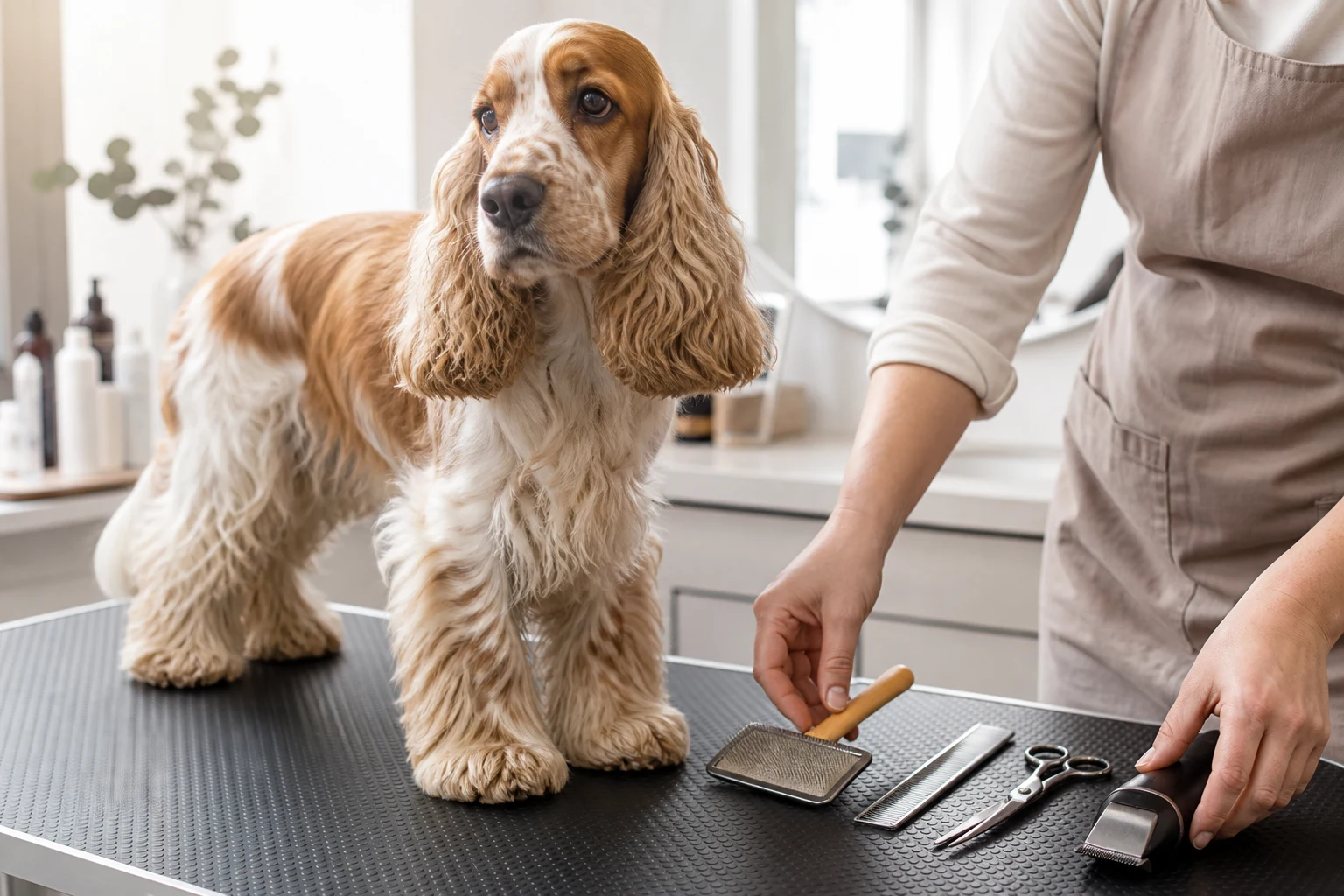
A show-coated dog needs a small, maintained set matched to its coat, the task and its comfort. A brush for dense undercoat may be wrong for fine furnishings; a sharp blade can be dangerous near loose skin. In a Canadian home, safety means light, a stable surface, clean equipment, short sessions and clear stopping points.
“Show-coated” describes presentation, not one texture. Short, double, long, curly and stripped coats behave differently. The Canadian Kennel Club grooming guide is a useful starting point. The breed, actual coat and professional advice should decide the method; no brush, comb or clipper is universal.
Choose by coat and by job
Define the job first: remove loose hair, open a tangle, inspect skin, tidy a visible paw edge or prepare for a professional. Short coats may need a soft brush; longer coats may need sectioning, a gentle slicker and a comb. Double coats may need careful undercoat work, never forceful stripping of healthy hair.
The American Kennel Club’s grooming-tools overview explains why coat type guides choice. Treat it as education, not a shopping list. If a brush catches, pinkens skin or makes the dog flinch, change technique or stop.
Brushes: light pressure, small sections
A brush should move through hair without scraping skin. Work in small sections, lift the topcoat and look at the parting. Use short strokes around ears, elbows, armpits and tail furnishings, where damp friction can turn a tangle into a mat.
Do not repeat strokes until the coat looks perfect. Excess brushing irritates skin and makes grooming an endurance test. Alternate strokes with pauses. Line brushing can help on thick coats; a comb may be a better check on silky hair. The AKC grooming-challenges guide supports a gentler response to mats.
Combs and rakes: verification, not force
A metal comb can verify that a clean section is open when it passes from roots to ends without snagging. Never yank. A rake may help some double coats during shedding, but can remove too much hair or irritate another texture. Ask a groomer to demonstrate angle, pressure and stopping point.
Keep eyes, ears, lips, nipples, genitals, tail skin and paw pads out of casual tool paths. Dogs can move suddenly. Keep the tool pointing away from the body and never put a comb, rake or blade into an ear canal.
Clippers: a controlled task, not a shortcut
Clippers are efficient, not automatically safe. Blades heat up, cords startle and vibration complicates sensitive areas. Inspect equipment, manage heat and the working space, and follow its instructions. Avoid wet clipping, indiscriminate shaving of double coats and outline changes without a clear reason.
Clip only where you can see skin and hair direction. Avoid folds, eyelids, ears, nipples, sores and tight mats. Introduce sound at a distance and reward calm observation. A professional is safer for close work, difficult shaping, nervous dogs or coats hiding skin problems.
Rounded shears and the no-blind-cut rule
Rounded-tip shears can tidy a visible paw edge, but they are not risk-free. Keep blades parallel to the body, cut only isolated hair and use a comb as a guide. Never point scissors at skin, pull a mat away or cut near an eye because the dog is still.
A mat close to skin is a professional problem. Cutting can injure skin and pulling hurts. Mats may conceal redness, moisture, parasites or wounds. Leave it, keep the dog comfortable and arrange a qualified groomer or veterinarian; never use a kitchen knife, razor, solvent or home remedy.
Prepare the station before the dog arrives
Use a non-slip mat or a stable grooming surface at a comfortable height, with good lighting and tools within reach but not under the dog’s feet. Keep cords managed, blades covered when not in use and small tools secured. Have a towel, a rubbish bag and a first-aid plan available. The AKC advice on grooming feet, eyes and ears stresses gradual handling and a light touch; the same principle applies to the whole station.
Clean tools after each dog and between dirty tasks. Remove hair and debris, wash or wipe according to the tool maker’s directions, dry fully and store in a ventilated place. Do not improvise chemical disinfectant concentrations, mix products or soak electrical equipment. If a tool cannot be cleaned without damaging it, replace it rather than letting residue accumulate.
Teach cooperation in pauses
Cooperative grooming is a sequence of small permissions, not a wrestling match. Start with the dog on the floor: show the brush, feed or praise, and put it away. Next touch the shoulder with the back of the brush, reward and release. Add one stroke, then a pause. Practise lifting a paw, touching an ear flap and hearing a clipper from across the room. The AKC nail-care routine offers a similar gradual approach to handling.
Use a predictable release cue and finish while the dog can still succeed. If the dog freezes, pants, avoids the tool, snaps or repeatedly tries to leave, stop and make the next session easier. Do not punish communication. A force-free trainer or groomer can help you build a plan, especially after a painful mat or a frightening accident.
Feet, ears and nails need their own boundary
Paw hair, nails and ear furnishings are tempting places to practise with a new tool, but they are also high-risk. Ice melt, salt, grit and packed snow can irritate Canadian winter paws; wipe and inspect after walks. The AAHA cold-weather guidance covers post-walk paw care. Use nail clippers or a grinder only after teaching the sound and touch, and stop if the nail is abnormal or the dog is painful.
Do not pluck ear hair, probe an ear or use a grooming tool to remove a suspected foreign body. Pain, odour, discharge, head shaking or a sudden refusal to allow ear handling is a veterinary question. Likewise, a brush cannot diagnose a cracked pad, infection, allergy or nail-bed problem.
When the skin changes the plan
Stop grooming and seek advice for persistent itching, redness, odour, sores, bleeding, sudden hair loss, painful mats, swelling, repeated licking or a sudden change in tolerance. The AAHA shedding resource notes that seasonal shedding can be normal but a marked change can deserve review. The Merck Veterinary Manual’s dermatology overview explains why diagnosis requires more than a closer look with a comb.
Keep products and tools away from the dog’s mouth. If a cleaner, lubricant, blade product or other substance contacts the coat or is swallowed, save the label and call your veterinarian or a poison-control service. The ASPCA household-products guidance and the Pet Poison Helpline cleaning-products resource explain why exposure advice depends on the substance and route.
A realistic show-prep rhythm
Keep everyday maintenance separate from final presentation. Daily or weekly care should make the coat comfortable and open, not chase a flawless finish. Before a show, use the breed’s documented grooming plan and a qualified professional where needed; do not experiment with a new blade, close scissor work or unfamiliar product the night before. The AKC grooming resource hub is a useful starting point for general topics, while your Canadian breed club and veterinarian can provide context for the individual dog.
For a complete home routine, pair this checklist with the guide to living with a show-coated dog at home and browse the editorial blog. The aim is a dog who can be handled safely, not a tool collection that promises a perfect finish.
FAQ
Which brush is right for my dog’s coat?
There is no universal brush. Match the tool to coat length, density, texture and the dog’s tolerance: a soft brush or mitt may suit a short coat, while a pin brush, gentle slicker or comb may suit a longer or denser coat. Ask a groomer to demonstrate on the actual coat.
Can I use a rake or de-shedding tool on every dog?
No. A rake may be useful for some undercoats but can irritate skin or remove hair unnecessarily when used with force or on the wrong texture. Use light pressure, short passes and stop when the dog is uncomfortable. The tool should solve a coat problem, not create one.
Are clippers and rounded shears safe at home?
They can be used only with training, stable equipment and a calm dog, but neither is automatically safe. Keep blades away from skin folds, nipples, eyes, ears and paw pads; use rounded-tip shears only for small, visible tidying tasks. Leave complex shaping and close mats to a qualified professional.
What should I do with a mat close to the skin?
Do not cut blindly, pull hard or slide a sharp blade under it. Mats can hide sore skin and the skin can move with the hair. Pause, keep the dog comfortable and arrange a groomer or veterinary assessment when the mat is tight, extensive, wet, painful or near a sensitive area.
How do I teach a dog to accept grooming tools?
Start with the tool at a distance, pair it with food or calm praise, and finish before the dog worries. Progress from seeing and sniffing to a brief touch, then one stroke or the sound of a clipper held away from the coat. Build pauses and a release cue into every session.
When should a veterinarian see a grooming problem?
Ask for veterinary advice for persistent itching, redness, odour, sores, bleeding, sudden hair loss, painful ears, swollen or cracked paws, abnormal nails or a sudden change in grooming tolerance. A brush or clipper cannot diagnose infection, allergy, pain or skin disease.
Sources for safe tool choices
For further reading, compare the Canadian Kennel Club grooming page, the AKC grooming-tools guide, the AAHA winter guidance and the veterinary and poison-safety sources linked above. Tool choice is an individual handling decision: protect skin, ears, nails and trust before worrying about ring-day polish.